Quick answer
Southern California homeowners should prepare for wildfire season by clearing the first five feet around the home, cleaning roofs and gutters, checking vents, moving combustible patio items, trimming defensible space, and confirming evacuation readiness before red flag winds arrive. CAL FIRE says home hardening and defensible space work together to give a house the best chance of surviving wildfire, and IBHS Wildfire Prepared Home guidance reinforces that the structure, the first five feet, and ongoing maintenance all matter.
Why preparation has to happen before the warning
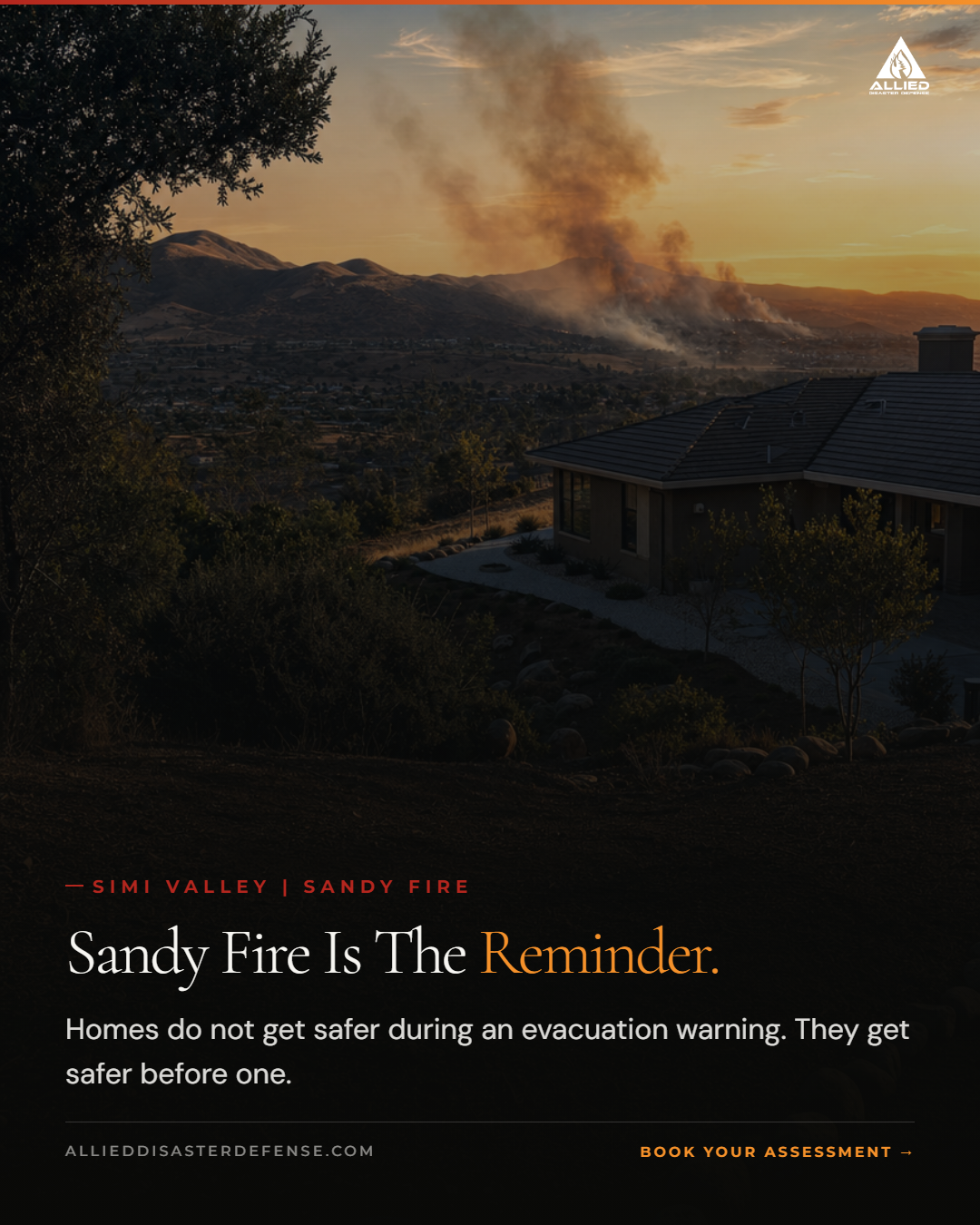
A red flag warning means weather conditions can support rapid fire growth. In Southern California, that often means low humidity, dry vegetation, and wind patterns that can push embers into neighborhoods before flames are visible from the property. By the time the alert arrives, homeowners should be making final checks, not starting major cleanup.
CAL FIRE’s preparedness guidance is blunt about the bigger picture: home hardening and defensible space need to work together. A cleared yard will not solve an ember-prone vent. A Class A roof still has risk if leaves are packed into valleys and gutters. A stucco wall can still be threatened if a wood fence, mulch bed, or cushion pile creates a flame path to a window or eave.
That is why preparation has to be staged in advance. Some tasks take an afternoon. Others require materials, contractors, HOA approval, or a second set of trained eyes. The goal is to finish the high-impact work before the forecast becomes urgent.
Think ember-first, not flame-first
Many homeowners picture wildfire risk as a wall of flame moving directly toward the house. That can happen, but wind-driven ember exposure is often the more practical planning problem for neighborhoods. Embers can land in roof debris, mulch, furniture, fence joints, deck gaps, or side-yard storage. Once those fuels ignite, the fire can move into vents, windows, siding, eaves, or under-deck areas.
This is the reason a Southern California readiness plan should start with ignition points, not just brush clearance. Brush matters, especially on slopes and canyon-facing lots. But a home can still be vulnerable when the yard looks neat from the street. The risk often hides in the details: the back corner of a deck, the side gate, a dryer vent, a roof penetration, a wood fence that touches stucco, or a narrow strip of bark mulch under a window.
IBHS Wildfire Prepared Home guidance focuses on the home ignition zone because the structure and nearby fuels decide whether embers become a structure fire. That aligns with how Allied Disaster Defense looks at readiness in the field. We do not treat wildfire preparation as only a landscaping issue. We look at the whole system: roof, vents, gutters, walls, windows, doors, eaves, decks, Zone 0, defensible space, utilities, maintenance, and evacuation readiness.
Start with the first five feet
The first five feet around the house, often called Zone 0 or the ember-resistant zone, is where homeowners can make some of the fastest improvements. CAL FIRE’s defensible space material highlights Zone 0 as the area closest to the home, and IBHS includes the 0 to 5 foot zone in its Wildfire Prepared Home requirements. This is not just a regulatory concept. It is a practical ignition-control zone.
Walk the entire perimeter of the home slowly. Look at the base of walls, under windows, around doors, at the garage, near the AC unit, behind gates, under decks, and where fences meet the structure. Anything combustible in this zone should be questioned.
- Move firewood, cardboard, storage bins, cushions, doormats, and trash cans away from walls.
- Replace bark mulch near siding with gravel, concrete, pavers, decomposed granite, or mineral soil.
- Trim plants so branches and leaves do not touch siding, windows, doors, decks, vents, or eaves.
- Remove dry leaves, pine needles, and debris from corners, drains, side yards, and fence lines.
- Check whether wood fencing, privacy screens, or gates connect directly to the home.
The most important mindset is separation. Combustible material should not be stacked, grown, or stored against the structure. Even small items can become meaningful when wind is pushing embers into the same corner for hours.
Check the roof, vents, and gutters
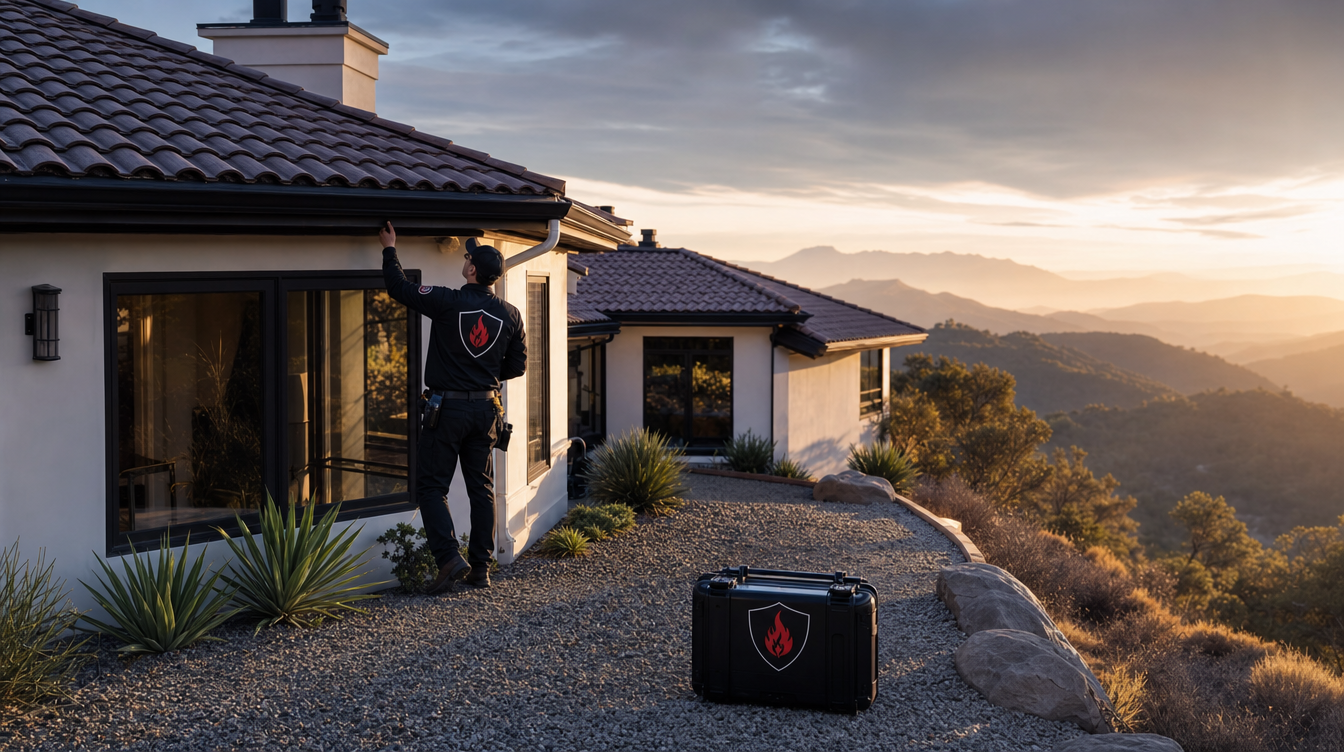
The roof system is one of the first places ADD checks during a wildfire readiness assessment. A Class A roof is the starting point, not the finish line. Roof valleys need to be clean. Roof penetrations need to be sealed and maintained. Barrel tile or corrugated roofing may need ember stops. Gutters should be noncombustible and free of leaves or needles.
Vents deserve special attention because they are designed to let air move through the home. That also means they can become ember entry points if they are not protected. In our inspection framework, vent protection includes attic vents, crawlspace vents, gable vents, eave and soffit vents, dryer vents, and mesh openings. Many wildfire-ready standards reference small mesh openings, often 1/8 inch or smaller, but product selection should also consider airflow, code compliance, and flame exposure.
Specialty vent manufacturers such as BrandGuard Vents and Vulcan Vents make ember-resistant or fire-rated vent products for WUI conditions. These are not the only products available, and every home needs the right fit, but they show why vent hardening is more than stapling random mesh over an opening. A good solution needs to manage embers while still allowing the building to ventilate properly.
Review decks, fences, patios, and attachments
Decks and attached structures are easy to overlook because they feel like outdoor living spaces, not fire pathways. During red flag wind conditions, anything attached to or touching the home deserves a closer look. Deck boards, stored cushions, outdoor rugs, wood pergolas, patio covers, and fence connections can all influence the fire path.
For decks, remove combustible storage underneath and around the edges. Check whether the underside is protected where needed. Keep furniture limited, clean, and moved away from the wall when winds are forecast. If a wood fence connects directly to the home, consider a noncombustible break near the structure. If a gate traps leaves against the wall, clear it before the first wind event, not after smoke is already in the air.
These are the practical details that make seasonal maintenance matter. A homeowner can spend money on large hardening upgrades and still leave a patio cushion stack against a vulnerable window. The big projects and the small habits both count.
ADD field note
Allied Disaster Defense uses a 47-point wildfire inspection framework aligned with IBHS Wildfire Prepared Home concepts, the 2025 Wildfire Prepared Home Technical Standard, and California ignition-resistant construction principles. For a seasonal readiness visit, we focus on the categories most likely to matter before wind arrives: roof debris, gutters, vent protection, wall-base clearance, windows and doors, eaves, decks, Zone 0, defensible space, utilities, and red flag maintenance. We also worked first hand during the Palisades fire and serviced many homes with long-term fire retardant, which reinforced how much early preparation matters once fire activity becomes active and fast-moving.
Your red flag wind checklist
Use this as a final readiness check before forecasted Santa Ana winds, red flag warnings, nearby fire activity, or extended dry conditions.
- Close windows, doors, attic access points, pet doors, and garage doors.
- Move patio furniture, umbrellas, cushions, rugs, planters, and trash bins away from the home.
- Clear leaves from roof edges, gutters, drains, decks, patio corners, and side yards.
- Check that combustible storage is not touching siding, fencing, garage doors, or vents.
- Make sure address numbers are visible from the street.
- Back vehicles into the driveway and keep the driveway clear for evacuation.
- Stage medications, documents, chargers, pet supplies, and go-bags.
- Review evacuation routes with everyone in the home.
- Do not rely on garden hoses as the main plan. Use them only as a minor readiness item.
IBHS also emphasizes ongoing maintenance and readiness behavior, not just one-time upgrades. That is the right mindset for Southern California homes. Fire season is not a single date on the calendar. It is a condition that builds through dry periods, wind events, and fuel conditions.
When to bring in a wildfire assessment
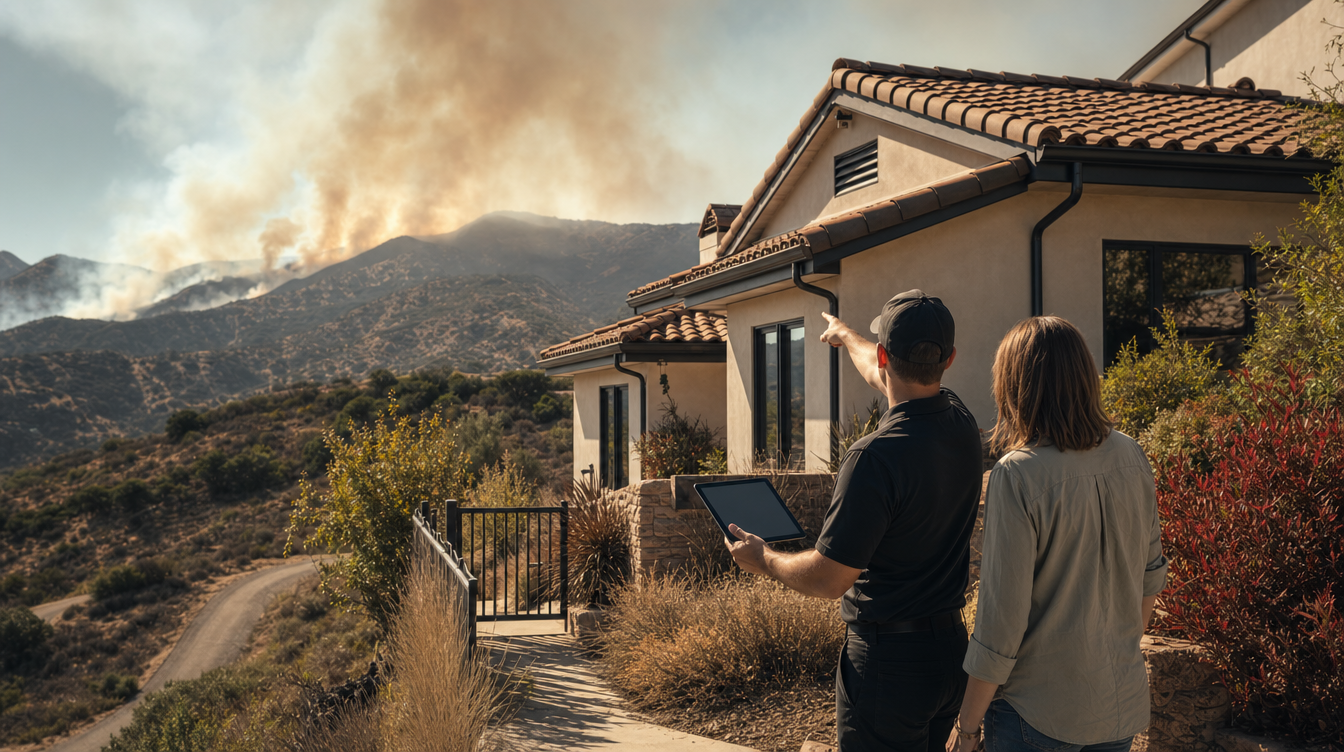
A homeowner can make meaningful improvements without a professional. But a wildfire risk assessment helps when the property has layered exposure: slope, canyon alignment, open space, older vents, wood fencing, decks, complex roofing, ornamental landscaping, or insurance pressure. The point is not to make the homeowner feel overwhelmed. The point is to prioritize what to fix first.
ADD’s assessment process turns the property into a ranked action plan. We look at the roof system, gutters, downspouts, vents, exterior walls, windows, doors, eaves, decks, Zone 0, defensible space, accessory structures, utilities, and red flag maintenance. The homeowner leaves with a better understanding of which items are immediate cleanup, which are maintenance habits, and which may require hardening work.
Get a property-specific wildfire readiness plan
Allied Disaster Defense performs wildfire risk assessments for Southern California homeowners who want a clear, prioritized plan before fire season intensifies.
Sources and further reading
FAQ
When should I start preparing my home for wildfire season in Southern California?
Start before the first red flag warning, ideally in late spring or early summer. Waiting until wind is already forecast leaves too little time for roof, gutter, vent, vegetation, Zone 0, and access work.
What is the most important area to clean first?
The first five feet around the home should be the first priority because embers can ignite small fuels directly against siding, windows, doors, decks, and vents.
Do ember-resistant vents matter?
Yes. Vents can be ember entry points into attics, crawlspaces, gables, eaves, and garages. The right vent solution should reduce ember entry while preserving needed airflow and code compliance.
Do I need a professional wildfire assessment?
If your home is near brush, slope, canyon, open space, older construction details, wood fencing, or decks, a professional assessment can identify ember-entry and hardening priorities that are hard to catch during a normal yard cleanup.