Quick answer
The Sandy Fire near Simi Valley is a local reminder for homeowners in Simi Valley, Agoura Hills, Thousand Oaks, Westlake Village, and nearby Conejo Valley communities to review wildfire weak points before the next warning. Start with Zone 0, roof and gutter debris, ember-resistant vents, decks, fences, defensible space, and red flag readiness. A wildfire risk assessment helps turn that list into a property-specific plan before smoke, wind, or evacuation pressure makes decisions harder.
What happened with the Sandy Fire
On May 18, 2026, local news and fire incident reporting identified the Sandy Fire in the Simi Valley area. CAL FIRE listed the incident in Ventura County at 10 acres and 0% containment at the time checked. ABC7 Los Angeles reported the fire was spreading near the 600 block of Sandy Avenue in Simi Valley, with evacuations and homes threatened. Those details can change quickly during an active incident, so homeowners should always follow Ventura County emergency alerts, local fire officials, and law enforcement for current evacuation instructions.
The purpose of this article is not to replace official incident information. It is to translate the Sandy Fire into a practical homeowner readiness checklist for the communities that share similar exposure: Simi Valley, Agoura Hills, Thousand Oaks, Westlake Village, Oak Park, Moorpark, and nearby neighborhoods with open space, slopes, dry brush, and wind exposure.
Active fires make wildfire risk feel immediate, but the most useful work happens before the next fire starts. A home does not become ember-resistant because a warning was issued. It becomes more resilient because the owner has already reduced near-home fuels, cleaned key areas, hardened vulnerable openings, and prioritized the property based on actual weak points.
Why this matters beyond Simi Valley
The Sandy Fire is a Simi Valley event, but the lesson applies across the Conejo Valley and western Los Angeles/Ventura County edge. These communities often share the same risk pattern: hillside homes, dry chaparral, ornamental landscaping, attached wood fencing, decks, patio furniture, narrow side yards, and seasonal wind events.
That combination matters because wind-driven embers can move ahead of visible flame. A homeowner may never see flames at the front door and still have embers landing in gutters, roof valleys, mulch beds, deck gaps, vent openings, or side-yard debris. CAL FIRE’s home hardening and defensible space guidance makes this point clear: the structure and the space around it have to work together.
IBHS Wildfire Prepared Home guidance also focuses on the home ignition zone, including the structure, the first five feet, and ongoing maintenance. That is the right framework for homeowners near Simi Valley and Thousand Oaks. Brush clearance alone is not enough if the roof has debris, vents are vulnerable, or Zone 0 is full of combustible material.
What homeowners should check first
If the Sandy Fire made you look at the hills, start by looking at the house. The most important readiness items are often close, ordinary, and easy to overlook.
1. Zone 0, the first five feet
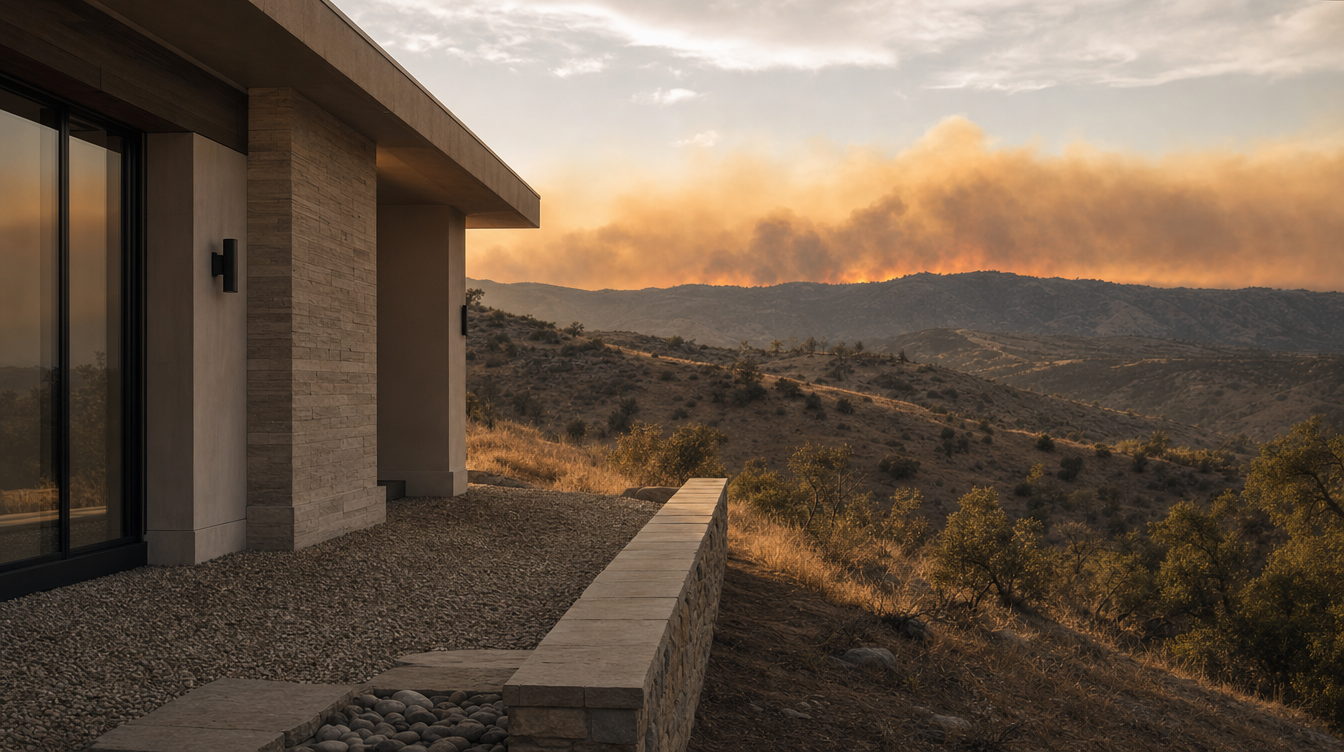
Remove combustible mulch, firewood, dry leaves, patio cushions, doormats, trash bins, and storage from the first five feet around the structure. Keep plants from touching walls, windows, doors, vents, decks, and eaves. Use gravel, concrete, pavers, decomposed granite, or mineral soil where possible.
2. Roof and gutters
Look for leaves, pine needles, and debris in gutters, roof valleys, around skylights, and near roof penetrations. A Class A roof helps, but debris can still create an ignition point. Gutters and downspouts should be noncombustible and clear before red flag winds arrive.
3. Vents and openings
Review attic vents, crawlspace vents, gable vents, eave and soffit vents, and dryer vents. Ember-resistant vents from manufacturers such as BrandGuard Vents and Vulcan Vents are examples of the specialized products available for homes in wildfire-prone areas. The right vent solution should reduce ember entry while preserving required airflow and code compliance.
4. Fences, decks, and attachments
Wood fences that connect directly to a home can carry fire toward the structure. Decks can collect combustible storage underneath. Patio furniture, umbrellas, rugs, cushions, and covers can all become near-home fuel during wind events. These items should be reviewed before fire weather is in the forecast.
5. Defensible space
Maintain grass height, remove dead vegetation, separate shrub masses, trim tree canopies, and reduce ladder fuels. Defensible space should slow and reduce exposure, but it should also connect to home hardening. A cleared slope does not solve a vulnerable vent or debris-filled gutter.
ADD field note
Allied Disaster Defense uses a 47-point wildfire inspection framework aligned with IBHS Wildfire Prepared Home concepts, the 2025 Wildfire Prepared Home Technical Standard, and California CBC Chapter 7A ignition-resistant construction principles. We review roof systems, gutters, vents, siding, windows, doors, eaves, decks, Zone 0, defensible space, utilities, accessory structures, and red flag readiness. We also worked first hand during the Palisades fire and serviced many homes with long-term fire retardant, which reinforced that readiness decisions should happen before neighborhoods are under active fire pressure.
How a wildfire risk assessment helps
A wildfire risk assessment turns a broad concern into a ranked action plan. Most homeowners can identify some obvious issues, but the value of an assessment is sequencing. What should be fixed this week? What can wait? What needs a contractor? What is maintenance? What is a hardening upgrade? What is only useful after the basics are handled?
ADD’s 47-point framework helps organize the property into practical categories: roof system, gutters and downspouts, vent protection, exterior walls and siding, windows and doors, eaves and overhangs, decks and attachments, Zone 0, defensible space, accessory structures, utilities, and maintenance readiness. The homeowner should leave with a clear understanding of the highest-risk items and the easiest first moves.
That matters after an incident like the Sandy Fire because urgency can lead to scattered spending. Homeowners may rush into visible landscaping work while missing roof debris, vent vulnerability, fence connections, garage seals, or combustible storage. A risk assessment helps avoid that by showing which items are most likely to change the outcome.
Where fire retardant fits
Long-term fire retardant can be part of a wildfire defense plan, especially for properties with vegetation exposure, open space adjacency, or seasonal fire weather risk. But retardant should not be treated as a panic button or a substitute for home hardening. It works best as a layer on top of preparation.
That preparation includes Zone 0, defensible space, vent protection, roof and gutter maintenance, deck storage removal, and evacuation readiness. When these pieces are handled, retardant planning can become a more strategic layer. Without them, a property can still have avoidable ignition points close to the structure.
What to do this week
If you live in Simi Valley, Agoura Hills, Thousand Oaks, Westlake Village, or a nearby community, use the Sandy Fire as a reason to do a practical property walk this week.
- Clear the first five feet around the home.
- Remove leaves from gutters, roof edges, drains, decks, and side yards.
- Move patio furniture, cushions, trash bins, and storage away from walls.
- Look at attic, crawlspace, gable, eave, soffit, and dryer vents.
- Check wood fence connections and deck undersides.
- Trim vegetation touching the structure.
- Review evacuation supplies, medication, documents, chargers, and pet needs.
- Schedule a wildfire risk assessment if you want a property-specific plan.
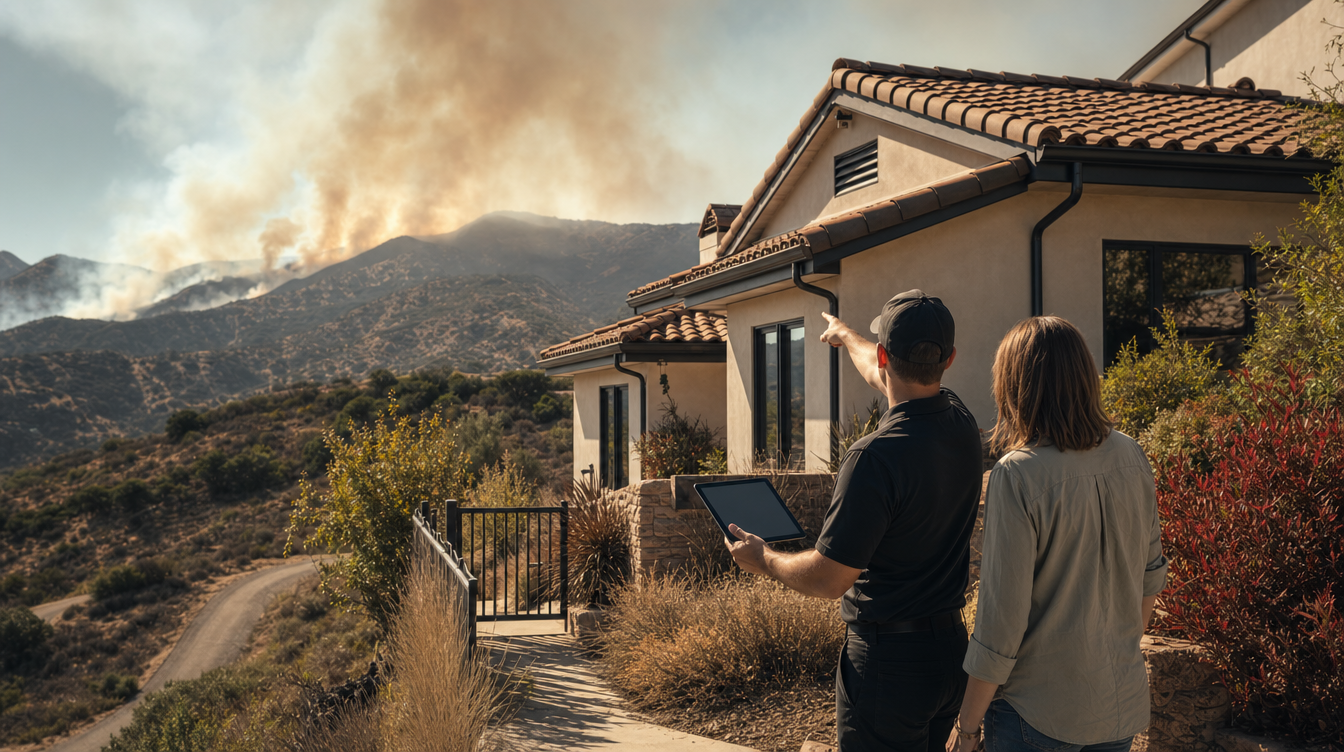
Do this walk in daylight if possible. Take photos of problem areas, especially vents, roof edges, fence connections, mulch beds, deck storage, and side-yard debris. Photos make it easier to compare conditions later and help a professional assessment move faster because the homeowner already knows which areas felt questionable.
If you share a fence line, slope, or open-space edge with neighbors, talk to them too. Wildfire readiness is strongest when the homes next to each other reduce fuel pathways together. One well-prepared home can still face exposure from a neighboring fence, shed, tree canopy, or unmanaged side yard.
Know what to fix before the next warning
Allied Disaster Defense provides wildfire risk assessments for Southern California homeowners who want a clear, prioritized plan before fire season intensifies.
Sources and further reading
FAQ
Was the Sandy Fire a reminder for Thousand Oaks and Agoura Hills too?
Yes. Even if a fire starts in Simi Valley, nearby communities with similar wind, slope, open-space, and vegetation exposure should use the event as a readiness reminder.
What should I check first after a nearby fire?
Start with Zone 0, roof and gutter debris, vents, decks, fencing, side-yard storage, defensible space, and evacuation readiness.
Does a wildfire risk assessment replace brush clearance?
No. It helps prioritize brush clearance alongside home hardening, vent protection, Zone 0, maintenance, and other property-specific risk factors.
Should I wait until another red flag warning to prepare?
No. Red flag warnings are the final check, not the starting point. Preparation should happen before wind and fire activity create pressure.