Knowing your gas line size is the first step to installing an automatic earthquake gas shut-off valve—one of the most effective ways to reduce fire risk after seismic activity. This quick guide shows homeowners exactly how to measure a gas line safely and correctly.
Step 1: Locate Your Gas Meter
Your natural gas meter is typically located:
- On the side of the house
- Near the front of the property
- Occasionally along an exterior wall or utility area
You’ll usually see:
- A round gas meter
- A straight section of pipe entering or exiting the meter
- A manual shut-off valve with a flat rectangular handle
Do not turn anything. This is a visual inspection and measurement only.
Step 2: Identify the Straight Pipe Section
Look for a straight piece of pipe:
- Just before or after the gas meter
- Between fittings such as elbows, joints, or the shut-off valve
This straight section is where an earthquake gas shut-off valve is typically installed.
Step 3: Measure the Pipe Diameter (Critical Step)
Using a tape measure or ruler:
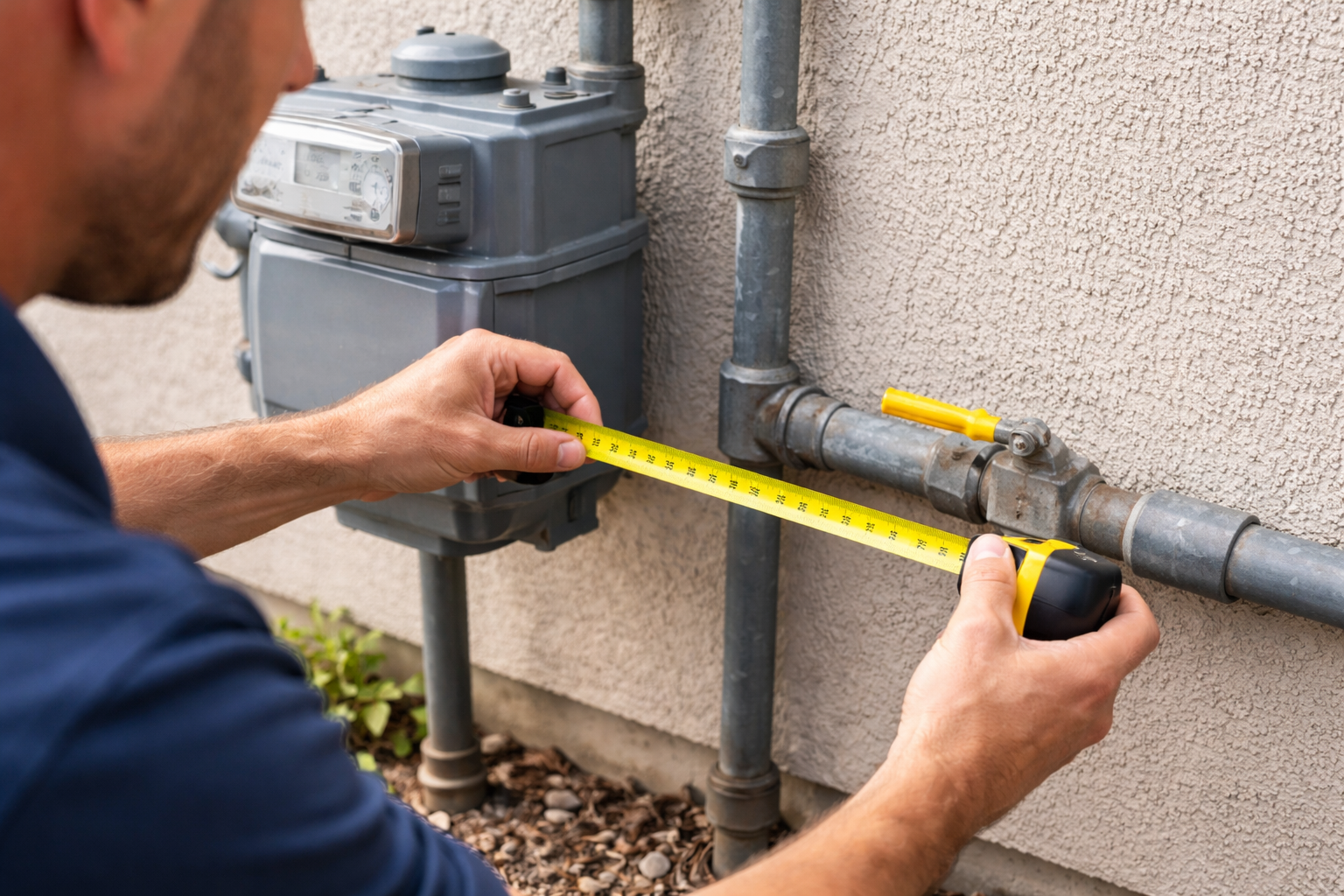
- Measure straight across the pipe, edge to edge
- You are measuring the outside diameter, not the inside
This measurement determines the correct valve size.
Step 4: Match Your Measurement to the Gas Line Size
Use the chart below to identify your gas line size:
Outside Pipe Measurement Gas Line Size (Tell Your Installer) ~ 1 inch ½-inch gas line (most common) ~ 1¼ inches ¾-inch gas line ~ 1½ inches 1-inch gas line Step 5: Take a Photo (Highly Recommended)
A quick photo can save time and prevent mistakes. Capture:
- The gas meter
- The straight pipe section
- The tape measure across the pipe
This helps confirm sizing before installation.
Next Steps: DIY or Professional Installation
You have options:
- DIY Route: Measure the gas line and work with a licensed local plumber
- Done-For-You: Call Allied Disaster Defense
We handle:
- On-site inspection
- Gas line verification
- Proper earthquake valve selection
- Professional, code-compliant installation
Earthquake & Wildfire Risk Reduction Starts Here
At Allied Disaster Defense, we specialize in proactive risk mitigation for homeowners—especially in earthquake- and wildfire-prone areas like Southern California. Installing the correct earthquake gas shut-off valve is a simple step that can significantly reduce fire and explosion risk after seismic activity.
Practical. Proactive. Proven protection—before disaster strikes.