 ALLIED
 Another layer between wildfire and your estate.
Long-term fire retardant can be strategically applied to selected vegetation and combustible fuels to help reduce their ability to ignite and carry fire.
- But where it is applied matters.
- How it is applied matters.
- And whether it belongs in your property’s strategy matters most.
Allied evaluates the estate first, then determines whether long-term fire retardant is an appropriate defensive layer.
Professional assessment · Strategic application · Documented treatment
We do not begin with gallons. We begin with the property.
Anyone can calculate acreage. That does not tell you where treatment creates the greatest potential value. Allied evaluates:
- Structure location
- Topography
- Vegetation
- Slopes
- Prevailing exposure
- Adjacent fuels
- Access
- Defensible space
- Existing home-hardening measures
- Property use
- Treatment feasibility
Where could treatment meaningfully strengthen this property’s broader wildfire-resilience strategy?
Only then do we design the application.
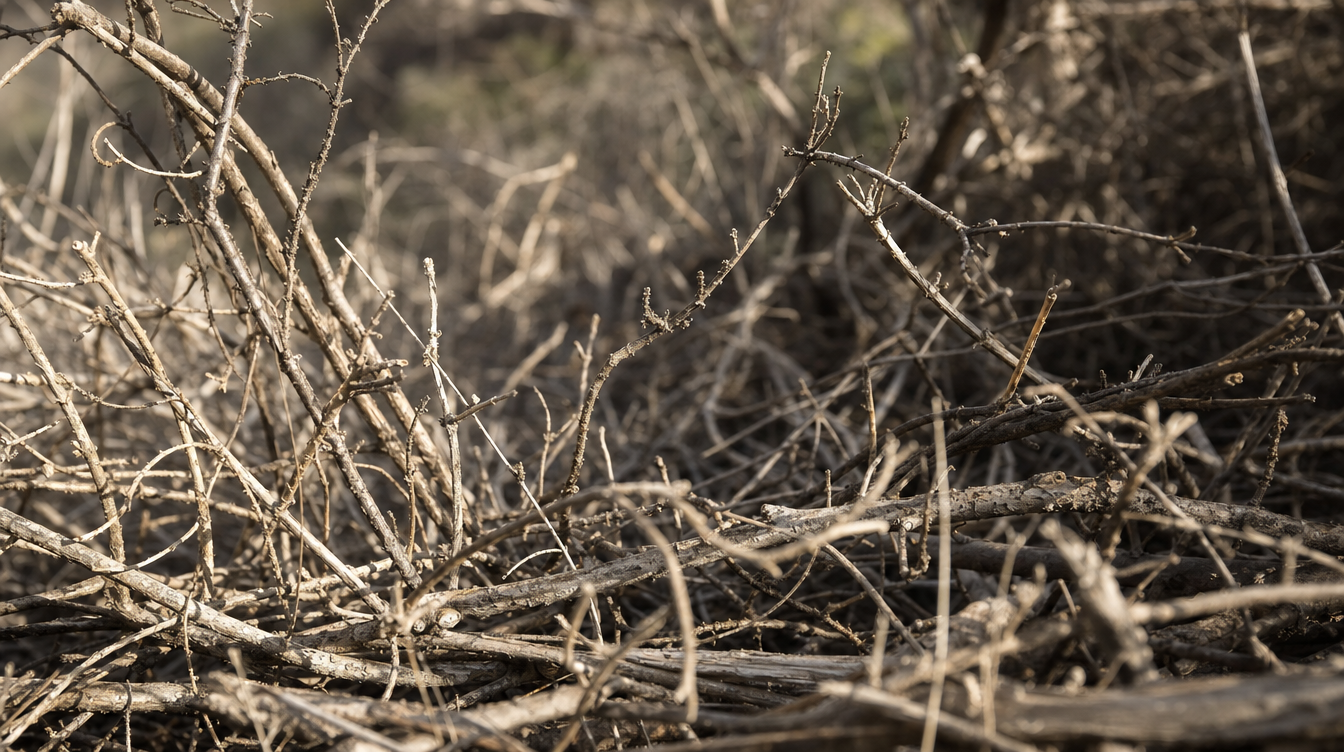
The fuel is what burns. Treat it before conditions turn.
Treat the fuel before the fire arrives.
Long-term fire retardants are designed to modify the combustion characteristics of treated fuels. When properly applied to appropriate materials, the treatment can help reduce the treated fuel’s ability to ignite and sustain combustion.
Unlike water, which primarily provides protection while moisture remains present, long-term retardant is designed to continue functioning after the treated area has dried, subject to product specifications, environmental exposure, weathering, and other conditions.
- It does not make vegetation fireproof.
- It does not create an invisible force field around the home.
- It adds another defensive layer.
Not every square foot deserves treatment.
Depending upon the estate, Allied may identify strategic treatment areas such as:
Selected vegetation that may influence approaching fire.
Vegetated areas where terrain may contribute to wildfire exposure.
Selected combustible vegetation outside areas where removal or replacement may be preferable.
Where appropriate, selected vegetation along property access corridors.
Locations where permanent landscape modification may be impractical or undesirable.
Specific areas identified through the property’s Private Risk Profile.
The objective is not maximum coverage. It is intelligent coverage.
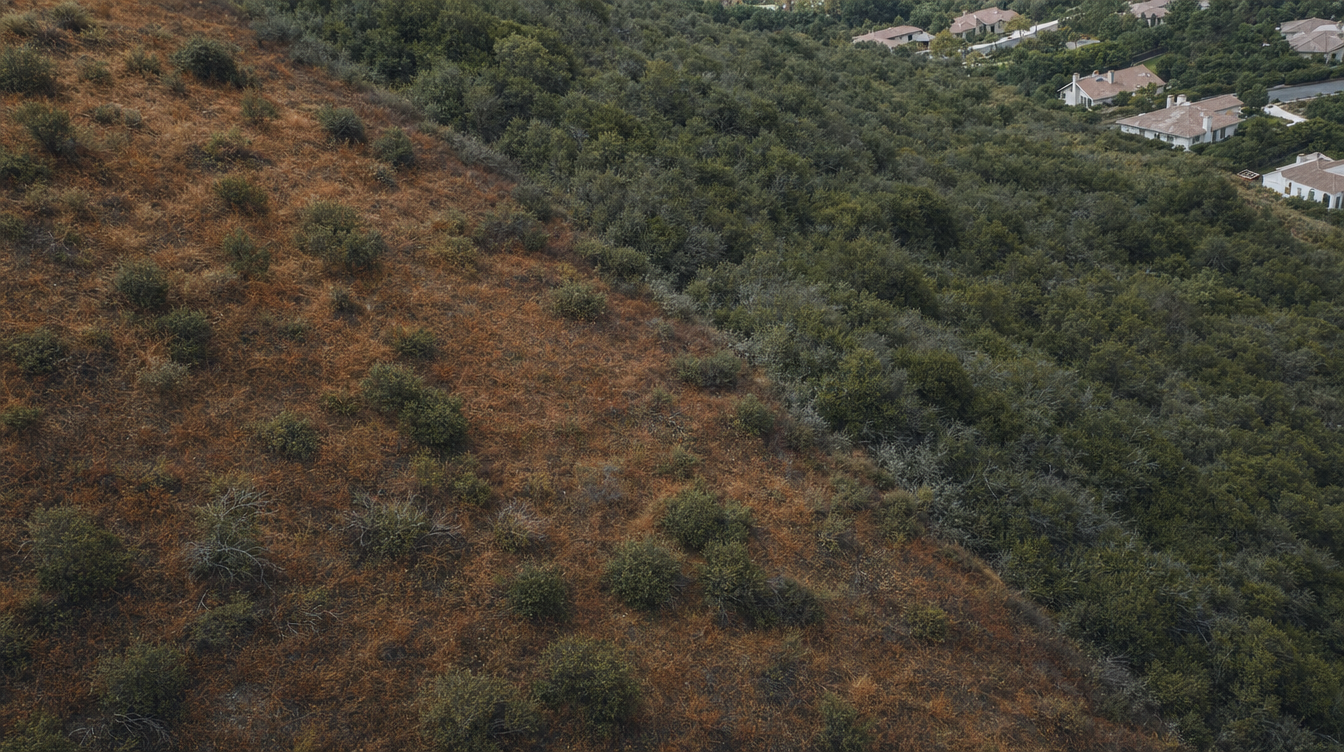
Treatment follows the risk, not the property line.
One tool should never become the entire strategy.
Long-term fire retardant does not replace ember-resistant construction, home hardening, Zone Zero, defensible space, vegetation management, property maintenance, household preparedness, evacuation planning, or fire-service response.
And no retardant can guarantee a property will survive wildfire.
Allied uses retardant as one component within a layered resilience strategy.
Sometimes the landscape is part of the asset.
Significant residential properties often include mature trees, architectural landscaping, privacy vegetation, vineyards, slopes, gardens, and other landscape elements that cannot simply be removed without consequence.
The answer cannot always be “clear everything.” Allied evaluates how wildfire resilience can be improved while considering landscape design, privacy, property aesthetics, mature vegetation, environmental considerations, views, architecture, and property use.
Where appropriate, long-term fire retardant may provide another option within that strategy.
Protecting the property should not require unnecessarily destroying what makes it exceptional.

The product is only as good as the application strategy.
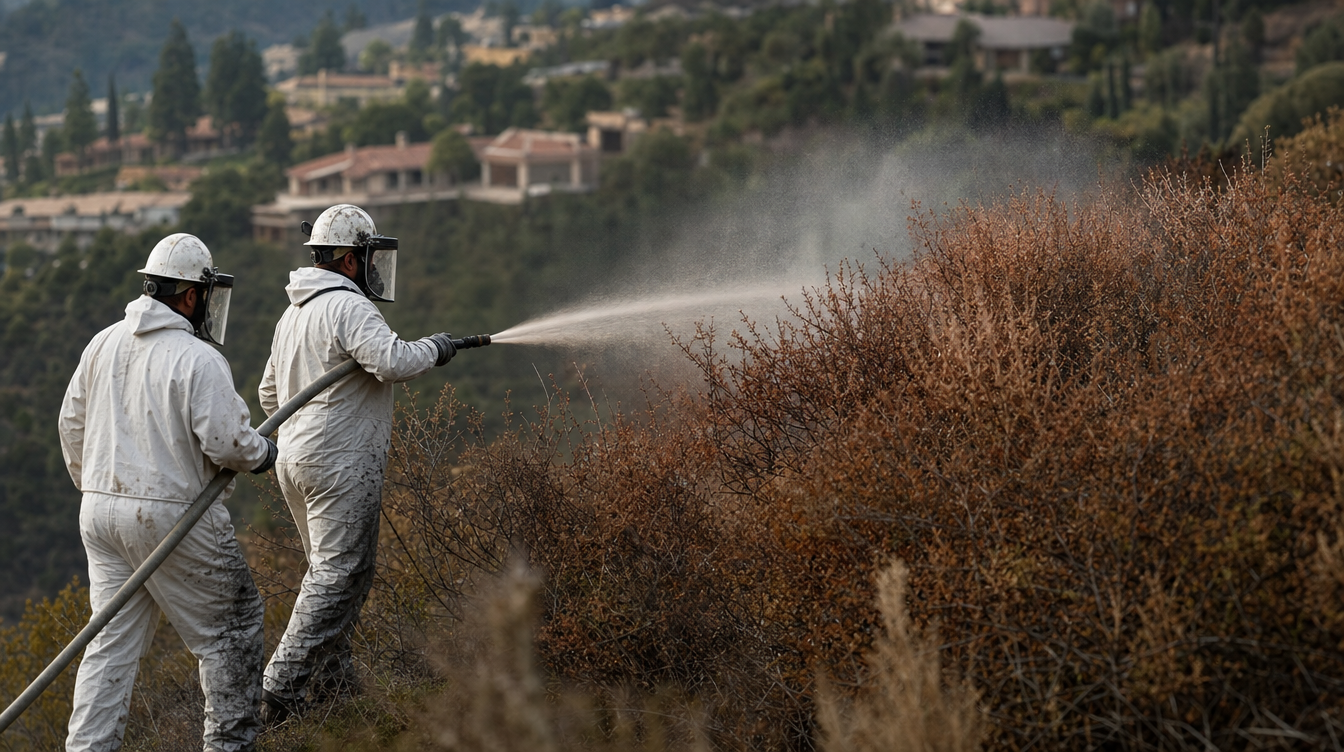
Coverage, timing and method decided before the hose comes off the truck.
Successful treatment requires more than purchasing material. Allied considers:
Which fuels are appropriate for treatment.
Which portions of the property warrant application.
Appropriate coverage based on product requirements and field conditions.
Timing relative to wildfire season, weather, and treatment objectives.
Application methods appropriate for the property and terrain.
Where treatment occurred and when.
A professionally planned application, not simply gallons sprayed across a property.
What a professional treatment looks like.
We evaluate the estate and determine whether retardant belongs in the strategy.
Priority treatment areas are identified.
The strategy is reviewed with the Client Family or authorized estate representative.
Appropriate access and application considerations are coordinated.
Trained crews apply the selected product according to the treatment strategy and applicable requirements.
Treatment areas, date of application, product information, and relevant photographs are documented.
The property is reviewed when appropriate to determine whether additional treatment or reapplication should be considered.
Know exactly what was treated.
Treatment zones are recorded against the parcel and become part of the property’s Private Risk Profile.
| Zone | Location | Treatment date | Approx. area | Status |
|---|---|---|---|---|
| Zone A | Southern slope | June 2026 | 0.9 acre | Applied and documented |
| Zone B | Western perimeter | June 2026 | 0.4 acre | Applied and documented |
| Zone C | Canyon exposure | June 2026 | 1.2 acre | Applied and documented |
| Zone D | Access corridor | Scheduled | 0.3 acre | Planned |
Illustrative. Each record also carries the product used, the application record, and photographic documentation.
Experience under real wildfire conditions.
During the Palisades Fire, Allied deployed multiple crews to perform wildfire-preparation and defensive activities across high-risk residential properties. Long-term fire retardant was one of the tools used as part of those property-specific strategies.
What those operations reinforced was simple. There is no single wildfire solution.
- Property knowledge. Preparation. Home hardening.
- Fuel management. Retardant. Access. Timing.
- And field execution all matter.
Layered protection is the strategy.
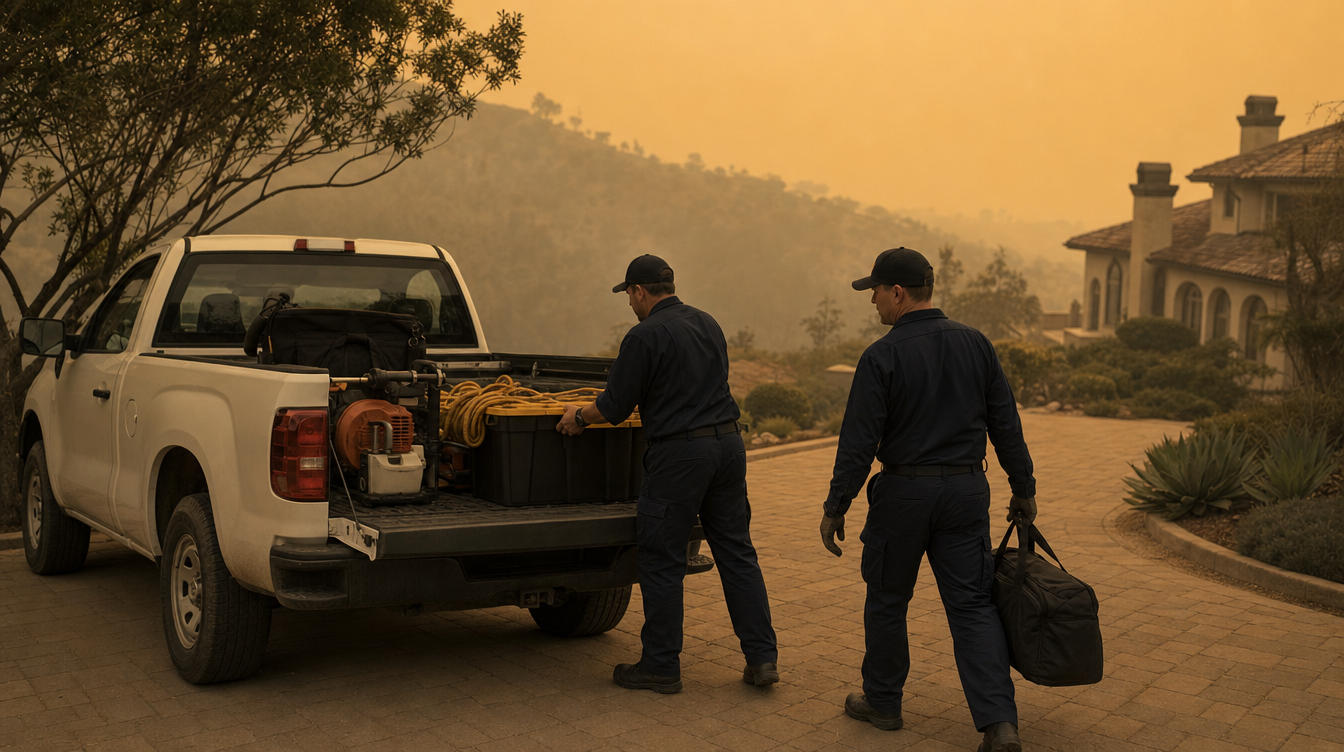
What the work looks like when conditions have already changed.
We will not sell a miracle.
We will never tell a Client Family “spray this and your house will not burn.”
Wildfire behaviour is too complex. Weather changes. Wind changes. Fuel conditions change. Fire intensity changes. Embers travel. Neighbouring structures can ignite.
Instead, we tell Client Families what the science and property conditions support: long-term fire retardant can be a valuable defensive tool when properly selected, professionally applied, and incorporated into a broader wildfire-resilience strategy.
That is the standard.
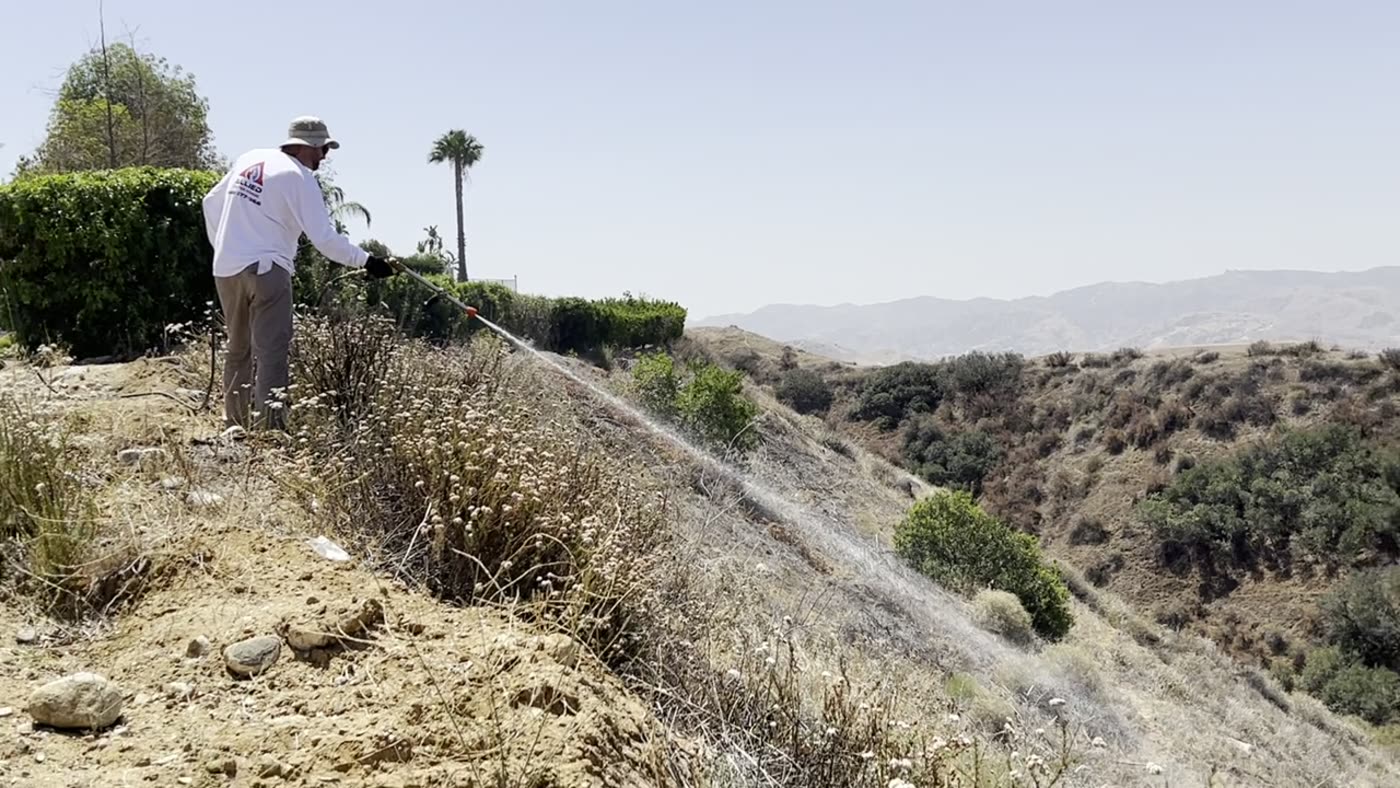
Treatment is not set it and forget it.
Properties change. Vegetation grows. Weather occurs. Landscaping is modified. Environmental exposure can affect treatment over time.
Client Families should understand when treatment occurred, what was treated, what product was used, what conditions may affect longevity, and when the property should be reviewed again.
For Allied Client Families, this information becomes part of the property’s ongoing resilience record.

Retardant can be purchased. Preparedness cannot.
Certain long-term fire-retardant applications may be available as standalone property services. But Client Families receive something fundamentally different: the treatment sits inside an ongoing property strategy.
Your advisor knows why it was applied, where it was applied, how it relates to other vulnerabilities, what still needs attention, when it should be reviewed, and how it fits within seasonal preparedness.
The product may be retardant. The value is stewardship.
What Client Families ask.
Does long-term fire retardant make my property fireproof?
No. No wildfire treatment can eliminate all wildfire risk.
How long does treatment last?
Performance depends upon the specific product, application, treated material, environmental exposure, weather, and manufacturer specifications. Allied provides product-specific guidance for the treatment recommended for your property.
Will rain wash it away?
That depends upon the specific chemistry and manufacturer specifications of the product being used. Allied will explain the performance characteristics of the recommended treatment before application.
Can you treat my entire property?
Potentially, but that may not be the smartest strategy. We first determine which areas warrant treatment and where other mitigation measures may provide greater value.
Is it safe around landscaping, pets, or people?
Safety considerations depend upon the specific product and application. Allied follows applicable manufacturer instructions and provides relevant product and safety documentation before treatment.
Does my insurance company recognize the treatment?
Carrier requirements vary. Allied does not promise insurance credit, renewal, eligibility, or premium reduction. We can document the treatment for use in conversations with your insurance advisor.
Do not spray the property. Build the right defensive strategy.
Long-term fire retardant may be one of the most powerful tools available for your estate. The first question is not how much you need. It is where it belongs.