The Client Family Relationship

What life looks like after Allied accepts your family.

The Allied Client Family relationship begins long before wildfire season. Your property becomes known to us, its vulnerabilities documented, its priorities established, and its strategy already in place.

A dedicated property risk advisor Your property known before the season Documented and kept current By application, capacity limited
Scroll

Traditional property protection begins with a phone call.

Something happens. Contractors are located. Availability is checked. Decisions are made under pressure.

Allied was built around a different premise.

The relationship should exist before the emergency does.

When conditions change, we are not meeting your property for the first time.

We already know it.

Where the Relationship Begins

First, we map exactly how fire would reach you.

No two estates are protected exactly alike. Topography, vegetation, construction, rooflines, vents, decks, access, water, and evacuation routes each change the property’s risk profile. Every Client Family relationship begins with a profile built for the property, kept current through the season, and acted on before fire weather.

  • Geographic risk & fire history around your address
  • How wildfire could reach you, wind, slope, and fuel paths
  • Vulnerabilities, and how we neutralize each one
  • Your protection plan, sequenced before the season

Complimentary, takes a few minutes, and becomes the foundation of the relationship.

Wildfire Risk Profile ADD-26 · Confidential

Representative estate. Pacific Palisades

Ember exposure
Slope & fuels
Access & egress
Reviewed on-site · Kept current all season · Acted on before fire weather
Your Private Property Risk Advisor

One relationship. One point of coordination.

Every Client Family has access to a Private Property Risk Advisor who becomes familiar with the estate and its evolving priorities. Your advisor coordinates the disciplines required to strengthen and prepare the property.

Assess

Understand the property’s current vulnerabilities.

Prioritize

Determine which improvements can meaningfully reduce exposure.

Coordinate

Bring together appropriate specialists and protection capabilities.

Document

Maintain a record of mitigation measures and property improvements.

Review

Revisit the property as conditions, landscaping, construction, or risks change.

Prepare

Establish plans before heightened wildfire conditions arrive.

You are not expected to become a wildfire expert. That is our responsibility.

Your On-Site Plan

Everything that decides whether a home survives, mapped and addressed.

Your risk profile becomes a working plan. Our fire professionals walk the property and address each element that matters when fire comes.
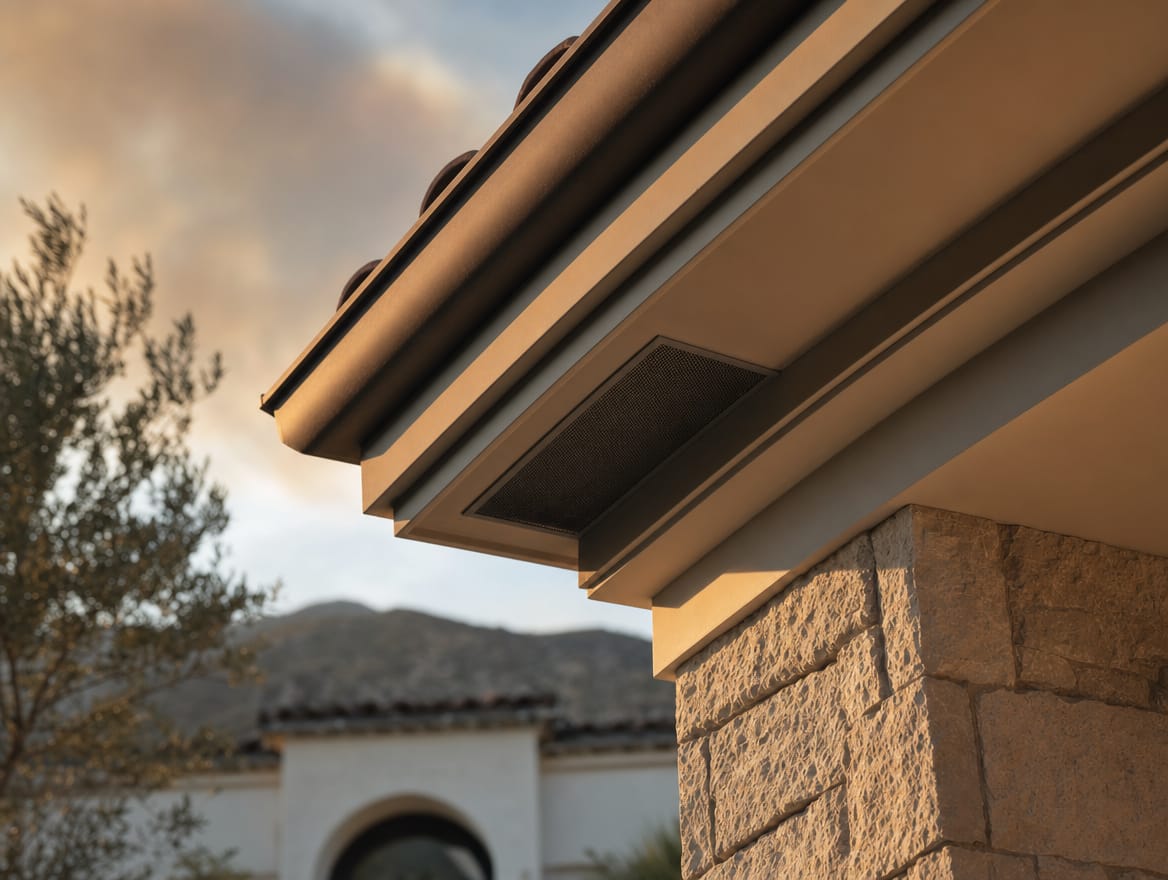
Close view of a luxury estate's tile roofline, eaves, and a mesh-screened vent, the ignition points a wildfire plan addresses first.
Vulnerabilities
Element 1 of 6

Vulnerabilities

Vents, eaves, gutters, decks, and combustible material against the structure. We document each ignition point and treat or correct it before the season.
Every fire season, the hills above Southern California ignite.

Wind-driven embers travel a mile or more ahead of the fire front.

Long before flames reach a neighborhood, the ember storm already has.

Ember attack, not the flame front, is how roughly 90% of homes are lost.

Source: Insurance Institute for Business & Home Safety

When the storm arrives, it finds every weakness.

The dry hedge. The mulch bed. The oleander along the fence line.

Everything around your home that can ignite, will.

You can’t call in an air tanker.

No one can order a retardant drop for their own home.

But you can call Allied Disaster Defense.

Our trucks carry the same long-term retardant the aircraft drop.

Applied precisely, on the ground, by fire professionals, on your property, before the fire arrives.

The Treatment

Long-term. Non-combustible.

We apply long-term fire retardant to the vegetation and vulnerable zones around your home. Treated fuels won’t sustain ignition.

Slopes & fuel corridors
Ornamental vegetation
Fence lines & hedges

Ignitable, rendered non-combustible.

How Coverage Extends

Three layers of defense, set on your property.

From the fuel closest to the structure out to the slopes where fire builds speed. Move through the layers to see how treatment extends across an estate.

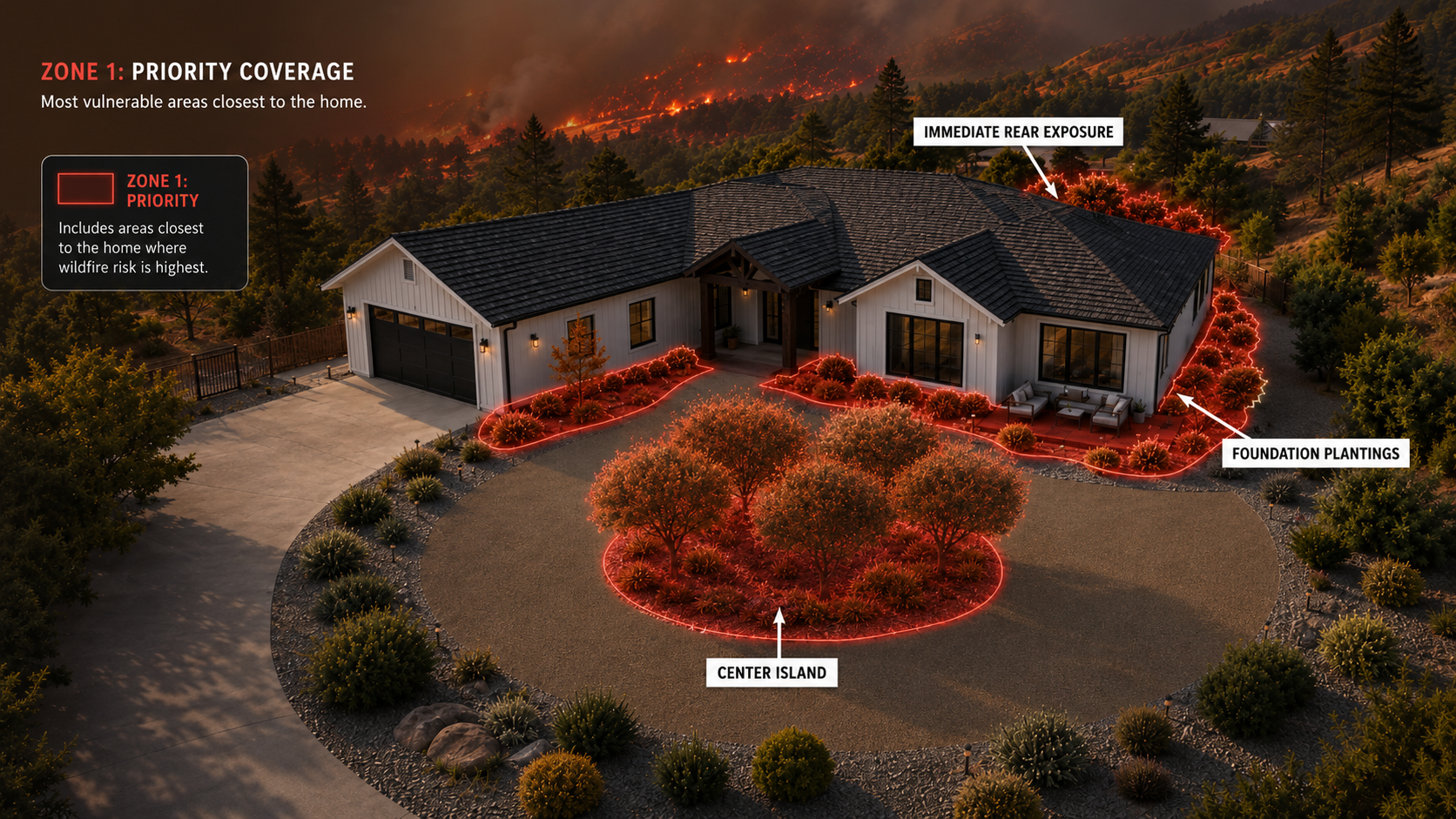
Priority fuelsNear-home vegetation, shrubs, fence lines, and deck-adjacent fuel, what carries fire to the structure first.
PerimeterOrnamental beds, side yards, driveway edges, and the broader defensible band around the estate.
Slope & hillsideCanyon-side vegetation where fire moves fastest and earns the most attention.

The exact coverage is set on site, by slope, vegetation, and access. Never from a template.

Priority-fuel defense layer nearest the home

Layer one covers the near-home fuels that carry fire to the structure first: vegetation, shrubs, fence lines, and fuel next to decks.

Prep & Go. Priority Dispatch Readiness

When others begin looking for help, our relationship already exists.

For eligible Client Families, Prep & Go provides an additional layer of readiness during wildfire season. When qualifying wildfire activity threatens the area, Allied can initiate established monitoring and response protocols based upon the Client Family’s plan, current conditions, access, evacuation restrictions, safety requirements, and operational availability.

Readiness Levels Readiness rises in steps as the season changes. Because the relationship already exists, each step is a continuation rather than a cold start. Every level remains conditional.

01. Season baseline

Ordinary conditions for the time of year. Nothing is imminent, which is when the useful work gets done.

02. Fire weather watch

Wind, heat, or falling humidity forecast ahead of time. The region is not yet under threat.

03. Elevated conditions

Red flag conditions arrive in the region. Ignition anywhere nearby would move quickly.

04. Qualifying activity

A fire is burning and the area is threatened. Households without a plan begin making calls.

05. Priority Dispatch Readiness

The highest level available to a Client Family. Where the plan can be acted upon, Prep & Go is the capability it draws on.

01

Monitor

Fire-weather and incident monitoring for your address, all season long, including red flag guidance before wind events.

02

Alert

When qualifying wildfire activity threatens the area, our team assesses conditions against your plan and confirms what the situation allows.

03

Dispatch

Where conditions, access, and agency restrictions allow, a crew and response vehicle are directed to the property under the plan already agreed with your family.

04

Apply

Long-term retardant is applied to targeted vegetation and vulnerable areas, helping reduce the treated fuel’s ability to ignite and carry flame.

The advantage is not merely response. The advantage is that the property was prepared before response became necessary.

Emergency and wildfire-response capabilities are subject to conditions including fire location, evacuation orders, road access, governmental restrictions, crew safety, operational capacity, and other circumstances beyond Allied’s control. No service can guarantee that a property will survive a wildfire.

For Insurance Brokers & Carriers

Protection should be visible.

Wildfire exposure is deciding what gets written in California. Allied memberships give your high-value clients documented, professional mitigation, not homeowner promises.

  • Inspection reports and mitigation documentation, ready for underwriting files
  • Season-long monitoring and an agreed response protocol, established with the household in advance
  • Portfolio-level programs for brokers and carriers protecting clients along the wildland-urban interface
Discretion

Private property protection should remain private.

Our Client Families may include executives, entrepreneurs, public figures, multigenerational families, and owners of significant residential assets.

Discretion is part of the relationship.

Property vulnerabilities, reports, plans, photographs, household information, and preparedness strategies are treated with the professionalism expected of a private advisory relationship.

Vulnerabilities and reports Plans and photographs Household information Preparedness strategies
Enrollment

We cannot serve everyone. By design.

Private advisory relationships require time. Property knowledge requires attention. Preparedness requires planning. And response capability is finite.

For that reason, Allied intentionally limits the number of Client Families accepted within individual regions. When capacity is reached, applications may be deferred or placed on a waitlist.

Open

Applications are being reviewed for this region now.

Limited

Few relationships remain. Review may take longer.

Waitlist

Capacity is reached. Applications are held in the order received.

Protect fewer families exceptionally rather than serve more families inadequately.

Client Family relationships are offered by application and subject to regional capacity. Levels, inclusions, and pricing are reviewed on the fit call, never on a public page.

The Client Family Relationship

The best time to build your disaster team is before there is a disaster.

Your home may represent decades of work, family history, memories, and responsibility. Protecting it deserves more than a last-minute phone call. It deserves a plan, a team, and a relationship already in place.